


College Basketball Scandal Rocks the NCAA After a Temple Player Bet Against His Own Team
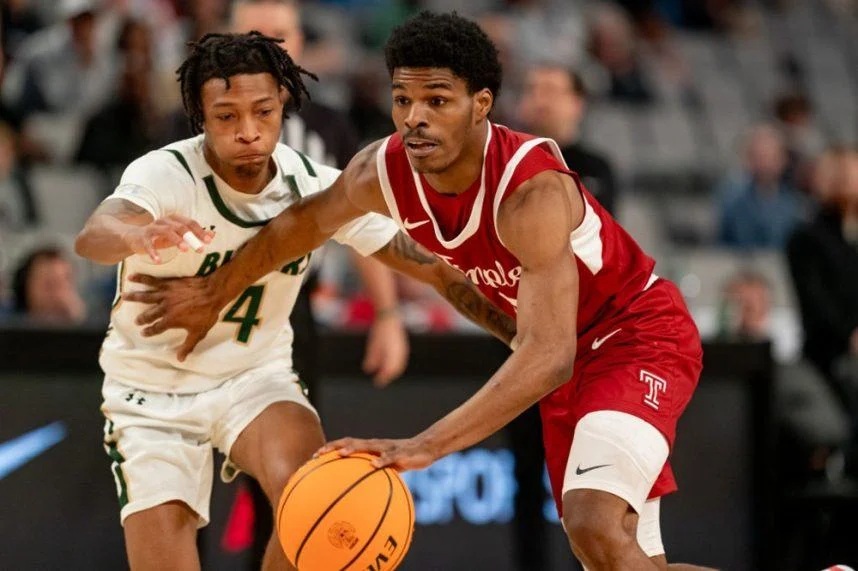
A scandal surrounding college basketball has once again drawn the attention of the American sports community. A former Temple player placed bets on games involving his own team, including wagers against it. The story went beyond a single incident, raising sharp questions about integrity in sports. How is college athletics responding to the threat posed by the growth of betting, and what consequences await those involved in this new wave of investigations?
How a Temple Player Found Himself at the Center of the Scandal
At the center of the events was former Temple guard Hysier Miller. In the spring of 2024, it was revealed that he had placed at least 42 bets on basketball games involving his own team, including at least three instances in which he bet against Temple. According to NCAA officials, the total amount wagered was $473. To circumvent oversight, the player used sportsbook accounts registered in other people’s names.
An additional layer to the situation is the fact that Miller was a leader of his team on the court: he started every game over the past two seasons and became the team’s leading scorer in the 2023–2024 season. This is precisely why the sports community reacted so sharply to the emergence of such information.
What the NCAA Investigation Revealed
The NCAA investigation began with an analysis of betting transactions and questioning of the key figure involved. The organization’s experts gained access to Miller’s bank statements and mobile phone. The player himself admitted to participating in betting on Temple games but denied taking any deliberate actions to influence the outcome. In the United States, this phenomenon is known as “shaving points” — the intentional reduction of one’s own performance to win a bet.
According to attorney Jason Bologna, the athlete provided all the necessary data and answered questions as openly as possible: “The key point is that the NCAA found no evidence of result manipulation. Miller cooperated and was honest at every stage of the investigation.” Nevertheless, the outcome was still severe: the NCAA ruled that Miller was permanently banned from participating in college basketball, regardless of the fact that no impact on game outcomes was found.
Coaches’ Bets and Disciplinary Measures
During the review, it emerged that the violations were not limited to players. Former Temple coaches Kamren Winter and Jaylen Bond also placed bets on sporting events. Importantly, their wagers did not involve Temple games, but new NCAA rules prohibit any betting by coaches and team staff.
As punishment, both specialists received a one-year “show-cause.” This term means that for one year, any university wishing to hire them must report to the NCAA and justify why such an individual should be employed. In addition, an extra measure was imposed in the form of a suspension from 10% of the official games of the season. According to the investigation materials, their case was not directly linked to Miller’s actions, but both episodes revealed a broader trend of rule violations.
The Role of Bookmakers and the Start of the Investigation
Suspicion of wrongdoing arose thanks to the monitoring of betting odds. During the 2023–2024 season, the line for one Temple game against UAB suddenly moved by six points, which is extremely unusual at that stage of the competition. The independent sports betting analytics company U.S. Integrity, which specializes in detecting anomalies, immediately notified its clients of possible violations. It was later выяснилось that Miller had been placing bets from November 2022 through March 2024, that is, over a fairly long period.
Such technologies make it possible to detect suspicious activity even where there is no direct evidence of collusion or manipulation. Systematic monitoring tools are now becoming the foundation for combating internal violations in sports leagues. When odds fluctuate without visible reasons, the question arises: can the hidden actions of individual players undermine the integrity of an entire championship?
The Scale of the Problem: How the NCAA Is Fighting Betting Among Students
The year 2024 became notable for the number of disqualifications: the NCAA suspended 14 athletes from seven universities for rule violations, including Miller. Under NCAA regulations, any sports betting by students, coaches, and staff is officially prohibited. Even small amounts are considered serious violations, as they undermine trust in results and the reputation of educational institutions.
According to ESPN, players from Western Michigan, Wisconsin, Dayton, and Eastern Kentucky have already been temporarily removed from their teams due to suspicions of betting. Any single episode can become a “trigger” for a large-scale investigation capable of affecting an entire tournament.
However, betting and related violations are not the only problem facing this program and college sports as a whole. Recently, stories have also surfaced that some players and staff engage in gambling outside the scope of sports betting. Formally, this is their personal business and in most cases is not prohibited, but without self-control such activities can affect concentration, psychological state, and, as a result, overall team performance.
Against this backdrop, formats are gaining popularity in which gambling shifts away from sports competitions and moves into a safer, entertainment-oriented sphere. These are live show games, where participants gather together, watch the process in real time, and play primarily for atmosphere and emotions rather than to influence the outcome of a specific match or season. Such formats reduce the risk of conflicts of interest and are perceived as part of the entertainment industry rather than sport.
One of the most vivid examples of this approach is Funky Time — a dynamic live show where the entire focus is on randomness, visual presentation, and overall gaming atmosphere. That is why many players who want to take a break from traditional sports betting choose the opportunity to play Funky Time game, without linking their excitement to the results of real teams and tournaments.
Ultimately, all these stories bring us back to the main theme: integrity and transparency remain core values for the NCAA and college sports as a whole. The growth of legal betting and gambling entertainment requires clear boundaries and responsibility; otherwise, even isolated cases can undermine trust in the entire system.
Why Such Violations Are Dangerous for the College Sports System
Scandals related to betting strike at the most sensitive point: trust in college competitions. Both the fairness of games and the legality of betting are put at risk. If even a small percentage of players or coaches can influence outcomes, a threat arises for the entire NCAA structure. Can a single violation escalate into a widespread crisis in college basketball?
The reaction from universities and experts was immediate. Sports law professor Jennifer Carson notes: “Any suspicion of a conflict of interest must be treated with the utmost severity. Only in this way can the reputation of college sports be preserved.” Fans discussing the news often express concerns about whether betting rules and oversight should be tightened even further.
What Lessons College Sports Are Learning and What Comes Next
Miller’s case is compared to major scandals of the past, but the current wave of investigations differs in scale and technological sophistication. The NCAA is drawing conclusions: new monitoring methods, educational programs, and tougher penalties for all participants in the process are needed.
Investigations are ongoing: as of May 2024, around 30 new cases involving similar violations among basketball players have been opened. The consequences may affect the entire system of athlete development and tournament organization. Ahead lie, most likely, increased oversight, the introduction of analytical technologies, and new ways of educating players about the risks of betting.
This case not only became a catalyst for discussion about integrity but may also serve as a starting point for serious reforms in college sports. Which path the NCAA will choose and whether it will be able to maintain trust in competitions remains to be seen.