


The bracket buster formula: 5 mid-majors built for a deep march run
The bracket buster formula: 5 mid-majors built for a deep march run
March always tempts you to fall in love with a giant killer. Still, real bracket busters follow a pattern that shows up in the numbers long before the upsets hit your screen, like how Saint Louis ranks inside the top 20 of the NCAA NET rankings and sits near the top of mid-major lists this season, indicating efficiency and résumé strength that matter when brackets tighten.
Balanced efficiency on both ends, veteran guards who value possessions and a coach comfortable grinding through half-court chess matches tend to matter more than viral highlights. When you study this season's advanced metrics and late-February résumés, five mid-majors stand out as legitimate threats to reach the second weekend or beyond. Each brings a different personality, yet all share a common thread: discipline, depth and the kind of composure that travels well when the lights get bright, where the margin for error shrinks.
Saint Louis Billikens: Atlantic 10 balance with tournament teeth
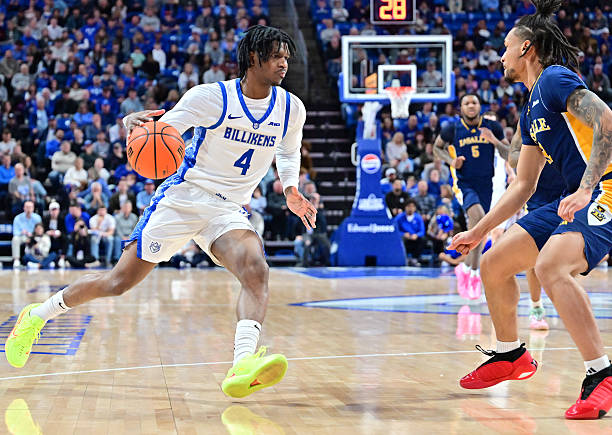
Saint Louis enters March with the profile you quietly trust when filling out your bracket. The Billikens rank inside the top tier nationally in adjusted defensive efficiency while pairing that toughness with a measured, top-40 offense that rarely wastes trips. Their rotation leans on experienced guards who can control tempo, hit timely threes and close games at the free-throw line.
If you track how odds evolve leading into Selection Sunday, you'll notice that respected books highlighted on the bets betting sites list by thelines.com have treated Saint Louis as more than a cute upset pick. That market respect reflects a team that rebounds its misses, protects the rim without fouling and owns multiple scoring options capable of carrying a night.
Utah State Aggies: guard play that travels in March
Utah State thrives because its backcourt operates with purpose and patience. The Aggies' primary ball handlers post strong assist-to-turnover ratios while their shot selection rarely drifts into desperation territory late in the clock. You can see the benefit in close games, where Utah State's offensive rating remains steady rather than spiking wildly from possession to possession.
Defensively, they pressure the perimeter without gambling recklessly, turning live-ball steals into efficient transition chances. Mountain West competition has hardened this group, while their résumé features quality wins that translate well to a neutral floor. When you project matchups, Utah State's ability to guard multiple positions and space the floor with capable shooters gives them a toolkit built for surviving both track meets and grind-it-out battles.
Santa Clara Broncos: veteran calm and half-court precision
Santa Clara may lack the national spotlight of larger programs, yet their underlying numbers tell a compelling story. The Broncos' offense leans on spacing, ball movement and smart cuts that produce high-percentage looks rather than contested jumpers. Veteran leadership steadies them during scoring droughts while their turnover rate sits comfortably below the national average.
You can imagine how frustrating that becomes for a higher seed accustomed to overwhelming opponents with athletic bursts. Santa Clara's coaching staff emphasizes scouting detail, preparing specific counters for opposing stars and late-game scenarios. In a tournament defined by short turnarounds, that preparation matters. If the Broncos dictate pace and keep possessions manageable, they have the maturity and shot selection discipline to steal a weekend.
Miami (OH) RedHawks: offensive tempo as a weapon
Miami (OH) offers a different blueprint, leaning into pace and scoring volume to pressure opponents from the opening tip. The RedHawks rank among the national leaders in points per game, fueled by a backcourt comfortable launching from deep and attacking downhill. You might worry about defensive lapses, yet their offensive efficiency often compensates, especially against teams that struggle to defend in space.
When Miami forces opponents to trade baskets, the math begins to tilt in their favor. Their guards excel at drawing fouls and converting at the line, turning close contests into two-possession leads in a matter of seconds. In a single-elimination setting, that scoring volatility can become a nightmare for a higher seed expecting a controlled, half-court affair.
San Diego State Aztecs: defense that dictates terms
San Diego State brings the kind of defensive identity that travels seamlessly into March. The Aztecs rank near the top of the nation in opponent field-goal percentage, contesting shots without surrendering easy second chances. Their frontcourt controls the glass, limiting extra possessions while carving out efficient put-backs on the other end.
You can feel how suffocating that becomes during extended scoring droughts, when every look arrives with a hand in the shooter's face. Experience anchors this group, particularly in late-game situations where rotations remain crisp and communication stays sharp. San Diego State rarely beats itself with careless turnovers, so that steadiness can unravel a more talented but impatient opponent over forty deliberate, physical minutes.
Final thoughts
When you step back, the formula becomes clear. Deep March runs rarely belong to teams dependent on one hot scorer or a chaotic style that swings wildly from night to night. These five mid-majors combine balance, maturity and a statistical profile that suggests sustainability rather than luck. As you build your bracket, consider how each handles close finishes, protects possessions and adapts to unfamiliar opponents.
Upsets may look spontaneous on television, yet they usually trace back to traits visible weeks earlier. If one of these programs lands in the right region, you could find yourself watching a familiar storyline unfold: disciplined basketball, timely shooting and another reminder that smart teams travel far when March demands precision.